
 EN
EN
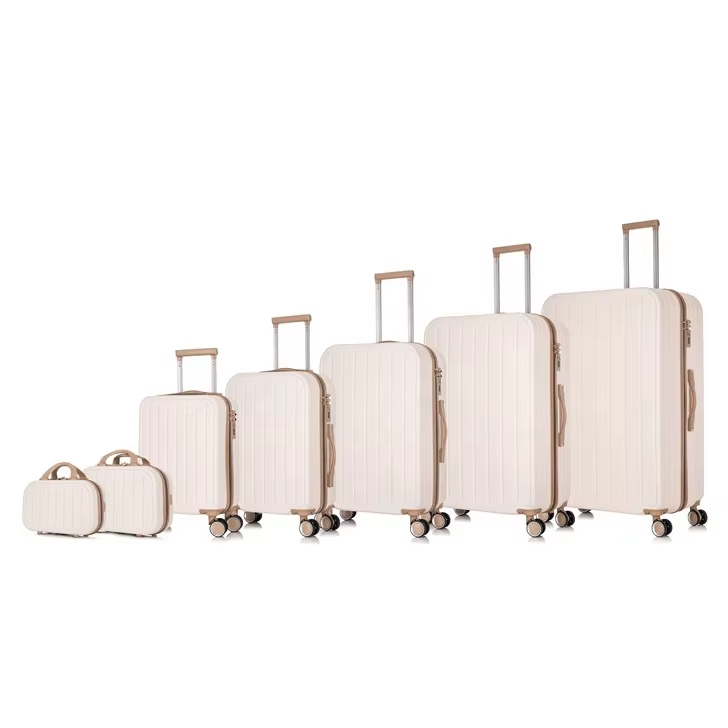
Why ABS Luggage Is the Top Choice for Long-Haul Travel Durability
Real-World Resilience: How ABS Withstands Airport Handling, Rough Terrain, and Climate Shifts
ABS luggage stands out for those long trips because it handles shocks really well. When bags get dropped on conveyor belts or bounced around rough roads, regular materials crack but ABS just bends and springs back into shape after getting hit. That means the suitcase stays intact even after multiple bumps along the way. Another big plus? ABS doesn't absorb much moisture so it won't warp when traveling through steamy airports or switching between cold cargo areas and hot beach destinations. The surface is tough enough to stand up against all those inevitable scratches at security checkpoints too. And travelers love how light these suitcases are compared to metal ones - studies show they weigh about 30% less. All these qualities combined make ABS a smart choice for anyone who travels internationally a lot and wants their gear to last trip after trip without breaking down.
Debunking the 'Durable ABS' Myth: Understanding ASTM and ISO Standards for Impact & Scratch Resistance
What makes something durable isn't really about what companies say it is, but rather what actual tests prove. Looking at ASTM D256 impact resistance numbers, we find that standard ABS materials usually handle around 5 to 7 Joules of force. That's enough for everyday bumps and drops most people experience, though still not as tough as those fancy polycarbonate mixes out there. When it comes to scratches, ISO 1518 testing shows something interesting about material quality. The cheaper ABS options start showing scratches when subjected to just 1 Newton of pressure, whereas better quality ones with special protective layers can actually stand up to forces as high as 5 Newtons before getting marked up.
| Standard | Metric Tested | Industry Benchmark | ABS Performance Range |
|---|---|---|---|
| ASTM D256 | Impact Resistance | ≤5 Joules | 5–7 Joules (moderate) |
| ISO 1518 | Scratch Hardness | ≤3N | 1–5N (varies by coating) |
| ISO 4892 | UV/Climate Stability | 500h exposure | 400–600h lifespan |
Crucially, ISO 4892-compliant ABS resists embrittlement after 400+ hours of UV exposure–non-compliant variants degrade 67% faster, according to textile lab analyses. Always verify certifications–not just material claims–to ensure you’re getting rigorously tested ABS, not a substandard variant labeled “premium.”
ABS vs. Key Alternatives: Making an Informed ABS Luggage Material Decision
ABS-PC Blends: Optimizing Strength, Weight, and Cost for Extended Trips
For those constantly on the move across continents, ABS-PC blends strike just the right balance between what travelers need most. They weigh around 12 to 18 percent less than straight polycarbonate luggage while standing up to dents better too about 1.5 times stronger than regular ABS cases. And let's not forget the wallet friendly aspect either these cost roughly 25 to 35 percent less at retail stores. What makes this material combination so good? The way it molds allows manufacturers to build in extra protection features inside the case such as reinforcing ribs that make everything sturdier without packing on unnecessary pounds. Tests according to ASTM D256 standards show these materials can handle drops from much greater heights compared to standard ABS about 40 percent more impact resistance actually. That kind of toughness matters when dealing with airport overhead bins, squeezing through crowded terminals, or managing multiple flight segments where both durability and ease of movement become critical factors during travel.
Pure Polycarbonate vs. ABS Luggage: Flexibility, Crack Propagation, and Long-Term Structural Integrity
Polycarbonate offers superior raw impact absorption–2.3x greater than ABS per ISO 6603-2–but its high flexibility introduces trade-offs in real-world use:
| Property | ABS Luggage | ABS-PC Blend | Pure Polycarbonate |
|---|---|---|---|
| Impact Resistance | Moderate | High | Very High |
| Flexibility | Low (≈5° bend) | Medium (15° bend) | High (30°+ bend) |
| Weight | Lightest | Moderate | 17% Heavier |
| Price Point | $–$$ | $$ | $$$ |
The flexibility that makes polycarbonate so good at resisting shattering also means it tends to wear down faster when exposed to abrasion. According to research from the Transportation Research Board in 2023, after going through over fifty load cycles, ABS materials keep about 92% of their scratch resistance compared to just 79% for polycarbonate. What really matters though is how cracks spread. Polycarbonate takes energy by deforming temporarily, whereas ABS spreads out stress along its copolymer chains which helps maintain both shape and surface quality. When looking at long term performance too, ABS holds up better over time. Even after ten years of service in those tough conditions found inside cargo holds where temperatures can swing between minus twenty degrees Celsius and sixty degrees Celsius, ABS shows greater resistance to fading and keeps its structural properties intact much longer than alternatives.
5 Must-Verify Design Features That Guarantee Real ABS Luggage Durability
Reinforced Corners, Dual-Zipper Tracks, and Ballistic-Lined Shells: What to Inspect Before Buying
Material alone doesn’t guarantee durability–design execution does. Three non-negotiable features separate genuinely resilient ABS luggage from lookalikes:
- Reinforced corners with internal metal plates or polycarbonate overlays reduce impact damage by 40% at critical stress points.
- Dual-zipper tracks, paired with #8–10 gauge teeth, prevent seam separation under sustained internal pressure (50+ lbs).
- Ballistic-nylon linings laminated between ABS layers halt crack propagation from drops exceeding 4 feet–a known failure mode in unlined shells.
Manufacturers omitting these features see 63% higher failure rates in independent baggage-handling stress tests. Don’t rely on labels–press corners for rigidity, inspect zipper stitching density, and confirm liner specifications. Without these engineered safeguards, even top-tier ABS material falls short of real-world performance expectations.
FAQ
What is ABS luggage?
ABS luggage is made from a type of plastic known for its durability and light weight, making it ideal for frequent travelers.
How does ABS compare to polycarbonate for luggage use?
While polycarbonate offers higher impact resistance, ABS is lighter and maintains its structural integrity better over time, which is beneficial for long-term use.
Why should I consider ABS-PC blends?
ABS-PC blends optimize strength, weight, and cost, providing improved resistance to dents and offering more protection compared to regular ABS.
What features should I look for in durable ABS luggage?
Look for reinforced corners, dual-zipper tracks, and ballistic-nylon linings for enhanced durability.