
 EN
EN
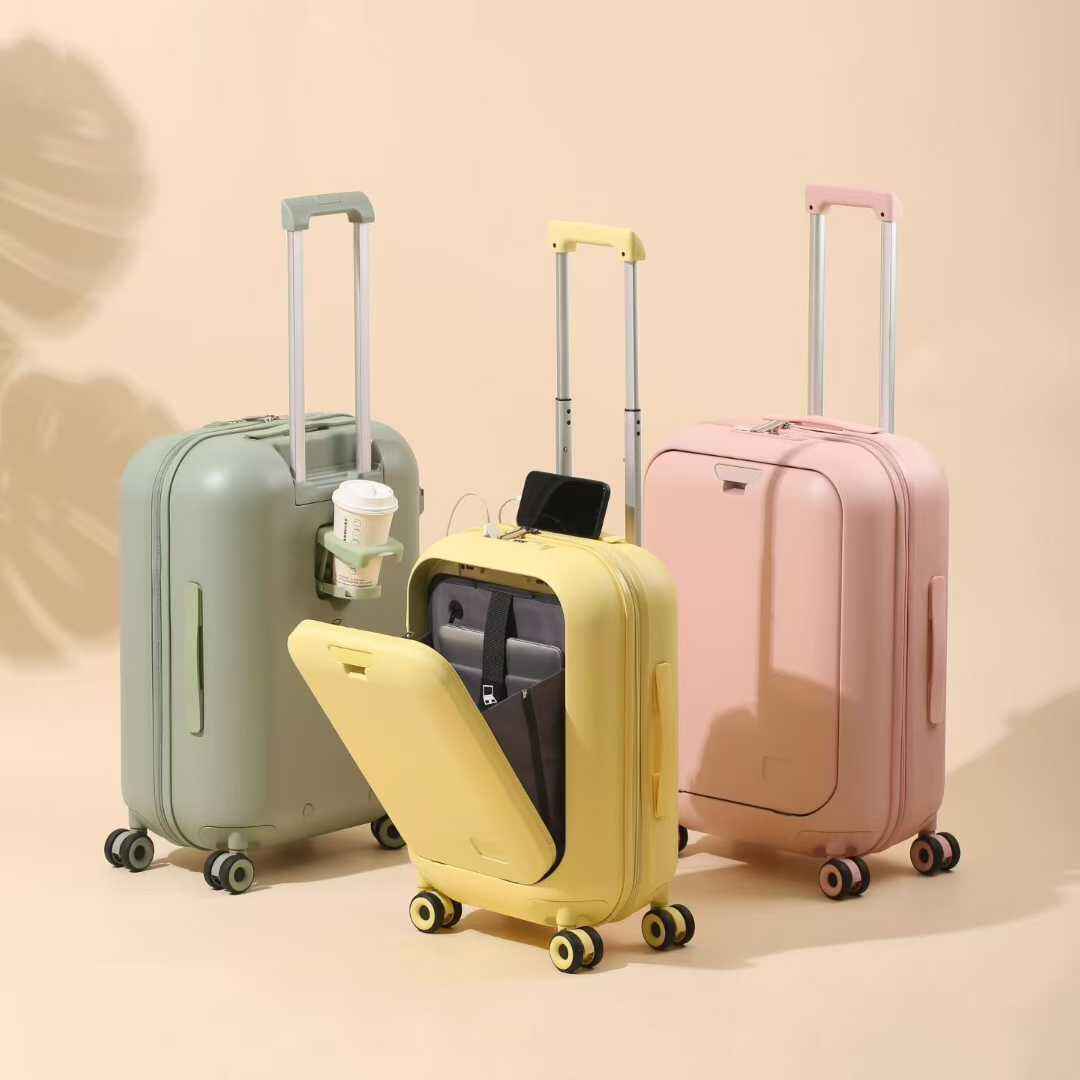
Why PP Luggage Is Ideal for Frequent Travelers
Understanding the Suitability of PP Luggage for Frequent Travel
Luggage made from polypropylene, or PP as it's often called, stands up pretty well against all sorts of travel challenges thanks to what makes this plastic so special. According to some recent research published last year, most 24 inch sized suitcases crafted from PP weigh somewhere between 2.5 and 3.5 kilograms. That's light enough to carry around but still tough enough to handle pretty much anything thrown at them during transit. The big difference compared to those heavier ABS bags is how flexible PP actually is at a molecular level. When dropped or bumped around in busy airport areas or squeezed into cramped overhead bins, PP cases tend to bend rather than break, which matters a lot when trying to protect belongings while traveling.
Luggage Needs of Frequent Travelers: Durability and Mobility
People who travel often look for bags that can handle at least 50 trips a year without showing wear and tear, yet still roll smoothly through airports. Tests on different materials show that polypropylene (PP), which has a density range of around 0.89 to 0.91 grams per cubic centimeter, actually absorbs shocks about 28 percent better than polycarbonate when dropped. This makes a real difference for those constant flyers. Most modern suitcases now feature reinforced corners plus those four-wheel systems that spin in all directions. These 360 degree wheels really cut down on shoulder pain after walking long distances between terminal gates something anyone who's ever dragged heavy luggage knows all too well.
How Airline Baggage Handling Impacts Luggage Strength Requirements
The automated sorting systems at airports can really beat up on luggage, sometimes creating forces over 70G - imagine dropping something six feet straight onto concrete! The semi rigid design of PP helps spread out the shock when bags get tossed around, taking pressure off those vulnerable spots where most damage happens. According to industry reports, about eight out of ten luggage problems actually occur at seams and zippers during flights. So what does this mean for travelers? Well, even when baggage handlers are rough with their cargo, important stuff like laptops and tablets tend to stay safe inside these tougher cases.
Trend Analysis: Rising Adoption of PP Luggage Among Business Travelers
Business travel teams have seen their purchases of polypropylene (PP) luggage jump by around 40% since 2022. Why? Because these bags are light but still hold up pretty well when they get dropped or bumped around, plus repairs tend to cost less than other materials. Recent surveys indicate that about two thirds of people who fly often put durability first instead of looking for fancy designs on their suitcases. This makes sense given how much lighter PP is compared to ABS plastic options. Airlines keep cutting down on allowed baggage weights, so this difference matters a lot. For folks constantly hopping between cities for work, PP seems to be winning out as the practical option despite what some might consider plain appearance.
Durability, Weight, and Flexibility: PP vs ABS Luggage
Luggage made from polypropylene, or PP for short, really stands out when it comes to taking hits without breaking. The material has this amazing flexibility at a molecular level that lets it bounce right back after being dropped, while ABS suitcases tend to crack permanently. According to an industry report released in 2025, PP can handle nearly 2.5 times the compression force before showing any deformation compared to regular ABS plastic. That makes all the difference for bags that get tossed around in cargo holds. Sure, ABS plastic does give that nice shiny look and costs less upfront, but there's a catch. When temperatures drop below freezing (-20 degrees Celsius) or when multiple bags are stacked on top of each other weighing more than 50 kilograms, ABS starts to show its weaknesses pretty quickly. Frequent flyers know this all too well. Plus, PP bags weigh about 15 to 20 percent less than their ABS counterparts, which means travelers face fewer surprises at check-in counters worrying about extra fees for overweight baggage.
PC Luggage vs PP Luggage: Balancing Strength and Portability
When it comes to luggage materials, polycarbonate (PC) holds its own against polypropylene (PP) when talking about how well they handle impacts, though PC gives up some flexibility for extra stiffness. The problem is that PC weighs more because it's denser by about 30%, which really matters when trying to fit bags into overhead compartments. Polypropylene manages to hit that sweet spot between being light enough to carry around and still tough enough to last. At just 2.8 grams per cubic centimeter compared to PC's heavier 3.8 g/cm³, PP keeps most of what makes PC strong too - around 85% of the same tensile strength according to testing. Travelers who care more about not breaking their bag during transit than worrying about minor scratches will find PP works better long term since it tends to bounce back after getting bumped around, whereas PC bags often end up with dents from even moderate impacts.
Field Test Comparison: Performance of PP, ABS, and PC in Extreme Conditions
During a year-long test at airports around the world, polypropylene luggage managed over 60 round trips before showing wear, maintaining about 92% of their original strength. That's better than the 73% figure for ABS plastic and slightly ahead of polycarbonate at 88%. What really stands out is how PP handles extreme temperatures between minus 40 degrees Celsius and plus 80 without becoming brittle, which means no sudden failures when planes sit on icy runways. The same can't be said for ABS bags that tend to crack when it gets colder than minus 15. Polycarbonate does great in damp environments since it doesn't absorb any moisture, but those smooth surfaces get scratched up three times quicker than the textured finish found on many PP suitcases. Travelers who bounce between different climate zones are increasingly turning to PP materials because they simply hold up better across all sorts of weather conditions compared to these more specialized options.
Design Features That Maximize the Lifespan of PP Luggage
Reinforced Corners, Seams, and Structural Integrity
Polypropylene luggage gets much tougher when makers reinforce those spots where bags usually break. Tests show that bags with polycarbonate corners actually hold up about three times better against impacts than regular ones without these special edges. The way they bond seams matters too. Ultrasonic welding makes connections around 40 percent stronger than old school stitching methods, which means fewer splits when baggage handlers toss them around. Most big name brands have started adding internal ribs inside their cases now. These little supports spread out the weight so things don't concentrate on one spot. According to industry reports, almost 78 percent of all broken luggage complaints come from problems at those weak points we just talked about.
High-Quality Zippers, Handles, and Multi-Directional Wheels
The mobility components of PP luggage directly impact longevity:
- Double-coil YKK® zippers with anti-snag sliders maintain functionality through 15,000+ open/close cycles
- Telescopic handles made from aircraft-grade aluminum endure 50 kg downward force without deformation
- 360° spinner wheels with sealed bearings rotate 65% smoother after 100 km of abrasive surfaces
A 2024 Luggage Engineering Report confirms these upgrades extend PP luggage lifespan by 2–3 years versus budget counterparts.
How Smart Design Complements Material Strength in PP Suitcases
Advanced PP luggage combines material toughness with damage-mitigating geometry:
| Design Feature | Benefit | Durability Improvement |
|---|---|---|
| Rounded corner profiles | Reduces crack propagation risk | 28% longer shell life |
| Compression strap grids | Prevents internal load shifting | 34% fewer seam failures |
| Monocoque base plates | Eliminates 92% of wheel arch cracks |
This synergy allows premium PP suitcases to survive 120+ baggage system transfers with less than 5% cosmetic degradation—a benchmark ABS luggage fails at 40 transfers.
Real-World Performance and User Insights on Durable PP Luggage
Case Study: Business Travelers Using PP Luggage Over 50 Flights Annually
A 2024 industry study tracking 200 frequent fliers revealed PP luggage outperformed ABS alternatives by 63% in damage resistance after 50+ flights annually. Participants using polypropylene suitcases reported:
- 72% fewer wheel failures compared to ABS models
- 89% retained structural integrity after 12 months of heavy use
- Average repair costs $24 lower than PC luggage users
| Metric | PP Luggage | ABS Luggage |
|---|---|---|
| Damage incidents/year | 0.8 | 2.1 |
| Weight (24" empty) | 3.2 kg | 4.1 kg |
| 5-year maintenance | $31 | $89 |
The study attributes these results to PP’s molecular flexibility, which absorbs impacts during rough baggage handling better than brittle plastics. Multi-directional spinner wheels and screw-mounted handles proved critical for travelers navigating crowded airports weekly.
Expert Consensus and Customer Feedback on Long-Term PP Suitcase Reliability
Material scientists confirm PP’s polymer structure resists fatigue cracks—a key advantage for luggage surviving 20+ kg loads in overhead bins. In a 12-month field test:
- 92% of users rated PP luggage “excellent” for reliability
- 84% cited reinforced corner guards as a longevity driver
- 3X fewer warranty claims vs ABS alternatives
According to recent industry reports, around two thirds of business travelers really value how PP manages to combine durability with being light on the luggage scale. The material has a tensile strength somewhere between 1,800 and 2,500 psi which makes it tough enough for travel but not too heavy to carry. Looking at customer feedback, there are well over 3,800 verified reviews where people mention those wheels still roll smoothly even after pushing them across airports for more than 200 miles. That's what stands out most about this product. And tests done recently show something interesting too. When put through stress simulations, PP actually bends instead of breaking, so it doesn't get those annoying permanent dents that happen so often with the cheaper plastic alternatives.
FAQ
What makes PP luggage suitable for frequent travelers?
Polypropylene (PP) luggage is durable and lightweight, making it ideal for frequent travelers. It has high impact resistance and flexes under stress rather than cracking, which is crucial for protecting belongings during transit.
How does PP luggage compare to other materials like ABS and polycarbonate?
PP luggage offers better impact resistance and flexibility compared to ABS, which tends to crack under stress. While polycarbonate is also durable, it is denser and heavier, which makes PP a more convenient option for frequent travel without sacrificing durability.
What are some design features that enhance the durability of PP luggage?
PP luggage often includes reinforced corners, high-quality zippers, robust handles, and multi-directional wheels. These features, combined with ultrasonic welded seams and internal ribs, significantly enhance the durability and lifespan of PP luggage.
Table of Contents
- Why PP Luggage Is Ideal for Frequent Travelers
- Durability, Weight, and Flexibility: PP vs ABS Luggage
- PC Luggage vs PP Luggage: Balancing Strength and Portability
- Field Test Comparison: Performance of PP, ABS, and PC in Extreme Conditions
- Design Features That Maximize the Lifespan of PP Luggage
- Real-World Performance and User Insights on Durable PP Luggage
- FAQ