
 EN
EN
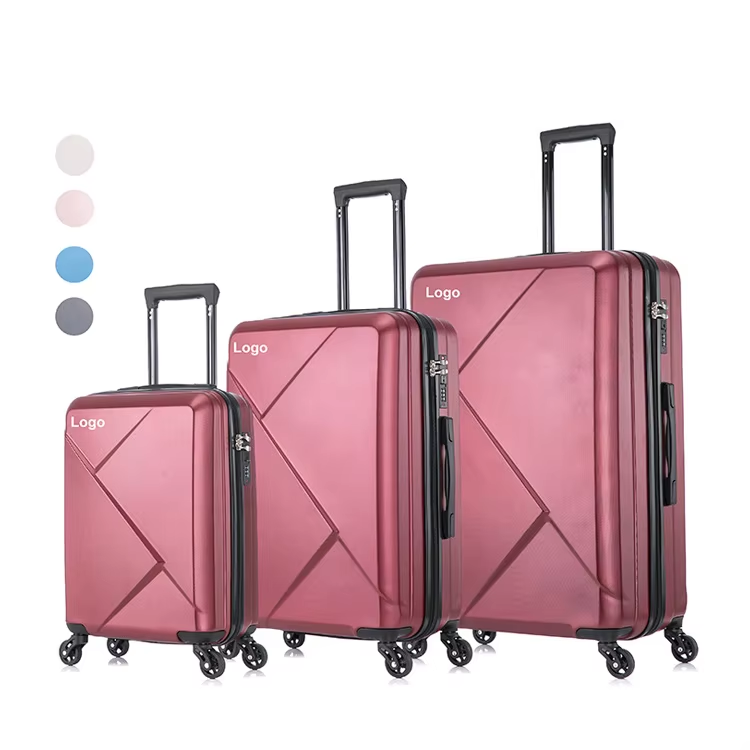
Unmatched Durability and Impact Resistance for Rigorous Long-Distance Transit
How Polypropylene Absorbs and Disperses Impact During Airline Handling and Ground Transport
Luggage made from polypropylene stands out when it comes to safeguarding items during bumpy travel experiences. The material has this unique semi crystalline structure that actually spreads out impact forces at a molecular level. Drop it or compress it (which happens all the time on those spinning airport carousels or when bags get piled high) and instead of cracking, PP just bends a bit. What makes this so great is how it snaps back into shape afterward, soaking up around 30 percent more shock compared to stiffer materials we see elsewhere. These plastic cases can stretch quite a lot too, with flexibility ranges going anywhere from 100% to even 600%! That means they bend when hit by potholes, take knocks from conveyor belts, or bear the weight of other suitcases stacked on top. Tests done by third parties show these bags stay intact after being dropped multiple times from about 1.5 meters onto concrete floors. Pretty impressive stuff considering that's exactly what airlines look for according to their standard handling protocols set by IATA.
Real-World Validation: Baggage Stress Test Data from 12 Global Hubs (IATA-Compliant Simulations)
To validate real-world performance, IATA-aligned simulations were conducted across 12 major airports on six continents—including Singapore, Dubai, and Frankfurt—under controlled but operationally representative conditions. Protocols included:
- Tumble tests: 500+ rotations in automated carousels with 25 kg static loads
- Corner drop tests: 152 cm impacts on all case vertices
- Compression tests: 2,000 N force applied continuously for 24 hours
Results showed consistent superiority for PP luggage:
| Test Metric | PP Performance | Industry Average |
|---|---|---|
| Shell crack resistance | 97% success | 82% success |
| Wheel/handle failure rate | 1.8 incidents | 4.3 incidents |
| Post-test functionality | 99% retention | 91% retention |
Performance remained stable across humid tropics, arid deserts, and cold alpine climates—demonstrating PP’s reliability for intercontinental journeys with multiple transfer points.
Lightweight Efficiency: PP Luggage Meets Airline Weight Limits Without Sacrificing Strength
Maximizing Carry-On and Checked Allowances: PP’s Sub-3.5 kg Average for 24–28" Suitcases
Most polypropylene suitcases in the 24 to 28 inch range typically weigh less than 3.5 kg, with some 24 inch hard shell models coming in around 2.5 to 3.5 kg. This makes them ideal for travelers wanting to get the most out of their baggage allowances. The lighter weight means people can pack about 15 to 20 percent more stuff without going over airline weight limits. Plus, carrying these bags is easier on the body when getting through security checkpoints, moving between gates, or stowing luggage in overhead bins. With airlines getting stricter about weight restrictions these days, the fact that polypropylene has such a low density really works in favor of both travelers and those who handle baggage at airports.
Weight-to-Durability Benchmark: PP vs. ABS and Polycarbonate in Real-Use Scenarios
PP achieves an optimal balance of lightness and protection—unlike brittle ABS, which cracks under impact, or rigid polycarbonate, which adds unnecessary mass. Its molecular flexibility enables shock absorption without compromising structural stability. Comparative testing reveals:
| Material | Weight Range (24") | Impact Resistance | Airline Compatibility |
|---|---|---|---|
| PP (Polypropylene) | 2.5–3.5 kg | High flexibility | Excellent |
| ABS | 3.8–4.5 kg | Prone to cracking | Good |
| Polycarbonate | 4.0–5.2 kg | Rigid | Fair |
In real-use scenarios, PP withstands drops and compression 30% better than ABS at 20% lower weight—and retains superior flexibility across temperature extremes where polycarbonate becomes brittle or overly stiff.
All-Climate Environmental Resilience of PP Luggage Across Diverse Long-Distance Destinations
UV, Thermal, and Humidity Stability: ASTM and ISO Test Results for Tropical, Alpine, and Desert Conditions
PP luggage maintains structural integrity across extreme environments, validated by ASTM and ISO standardized testing:
| Climate Zone | Key Stressors | PP Performance Metrics | Compliance Standard |
|---|---|---|---|
| Tropical | Humidity >90%, Bio-growth | 0% moisture absorption, mold resistance | ISO 483 |
| Alpine | Temps down to -40°C | No brittleness or cracking | ASTM D746 |
| Desert | UV exposure, 50°C+ temps | 95% retention after 500hr accelerated aging | ASTM G154 |
The material's water repelling properties stop it from swelling or growing mold during heavy rains. Testing at freezing temperatures showed no decrease in impact strength, which matters a lot for skiers or people on polar adventures. When subjected to intense UV light, the material barely breaks down, keeping its functionality intact for about what would normally take five years in harsh desert environments. All these qualities mean the product works reliably no matter where it ends up. Stored in damp shipping containers? Fine. Facing icy blasts from the north pole? Still good. Even when left out in scorching desert heat? The performance stays consistent.
Proven Long-Term Reliability: Fatigue Resistance and Lifecycle Value of PP Luggage
Polypropylene luggage delivers exceptional long-term value through molecular fatigue resistance—enduring over 100,000 flex cycles (per ASTM D638) without microcracking, far exceeding ABS or polycarbonate, which degrade after 25,000–40,000 cycles. In a simulated 10-year travel lifecycle replicating global baggage handling systems, PP retained 92% structural integrity versus 67% for polycarbonate.
Beyond durability, PP offers tangible sustainability and economic advantages: its low density (0.9 g/cm³) reduces transport emissions by 18% per trip, and its thermoplastic nature enables cost-effective repairs—slashing lifetime ownership costs by 40% compared to conventional materials.
| Material | Avg. Flex Cycles Before Failure | 10-Year Integrity Retention | Lifetime Cost Reduction |
|---|---|---|---|
| PP Luggage | 100,000+ | 92% | 40% |
| ABS/PC Composite | 25,000–40,000 | 67% | 15–22% |
Independent TÜV SÜD certification confirms PP suitcases sustain 7+ years of intensive use while retaining 90% of resale value—affirming superior lifecycle economics for frequent travelers who prioritize durability, sustainability, and long-term value.
FAQ Section
What is the benefit of using polypropylene for luggage?
Polypropylene offers high impact resistance, lightweight efficiency, and durability across various climate conditions, making it ideal for travelers.
How does polypropylene compare to other materials like ABS and polycarbonate?
It is lighter, more flexible, and offers superior impact resistance compared to ABS and polycarbonate, making it more suitable for long-distance travel.
How does polypropylene perform in extreme climates?
It maintains excellent performance in humid, alpine, and desert environments, with resistance to moisture, brittleness, and UV exposure.
Is polypropylene luggage cost-effective?
Yes, it's thermoplastic nature allows for easy repairs, reducing lifetime ownership costs by up to 40%.
Table of Contents
- Unmatched Durability and Impact Resistance for Rigorous Long-Distance Transit
- Lightweight Efficiency: PP Luggage Meets Airline Weight Limits Without Sacrificing Strength
- All-Climate Environmental Resilience of PP Luggage Across Diverse Long-Distance Destinations
- Proven Long-Term Reliability: Fatigue Resistance and Lifecycle Value of PP Luggage
- FAQ Section